

Southeast Asia
Overview
Southeast Asia is defined less by one dominant genre than by continual negotiation between ceremonial music, court traditions, karaoke and broadcast pop, religious sound worlds, and fast-moving digital circulation. Across the region, many successful records balance immediate melodic access with local timbral cues, danceable rhythmic lift, and arrangements that can survive participatory listening environments.
Geographic And Cultural Scope
This page uses Southeast Asia as a broad frame for mainland and island markets including Indonesia, the Philippines, Thailand, Vietnam, Malaysia, Singapore, Cambodia, Laos, Myanmar, Brunei, and Timor-Leste, plus related diaspora networks. That frame is highly uneven. Islamic, Buddhist, Catholic, courtly, rural, urban, and platform-driven listening contexts can all reward different vocal behavior, instrumental color, and rhythmic density.
The region is also shaped by several overlapping spheres at once: Indian influence, Chinese diaspora commerce, Islamic musical exchange, colonial education systems, and contemporary pan-Asian pop circulation. That is why broad claims must stay provisional.
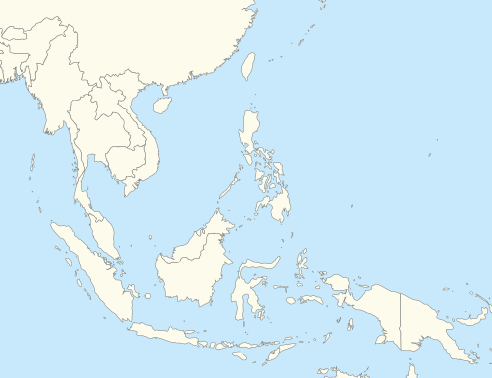
Map: Southeast Asia location map — License: Public domain

Historical Pressure Points
Several historical pressures explain the region's durable mix of local texture and rapid adaptation.
- Court and temple traditions, especially gamelan-related orchestral systems and other cyclic ensemble forms, preserved strong ideas about layered rhythm, metallophone color, and ceremonial pacing.
- Indianized, Chinese, Islamic, and local indigenous influences overlapped for centuries, producing flexible melodic and instrumental vocabularies rather than one closed canon.
- Colonial schooling, military bands, missionary music, and later broadcast systems introduced Western harmony, brass, keyboards, and pop-song architecture into urban life.
- Film songs, televised variety formats, and karaoke culture created strong demand for singable melodies and emotionally direct refrains.
- Informal copying economies, cassettes, VCDs, and later streaming accelerated cross-border imitation and hybridization.
- Contemporary platform ecosystems reward fast hook delivery, but many local audiences still respond strongly to recognizable regional timbre and speech rhythm.
Scenes, Cities, And Circulation
Southeast Asia works through several interconnected hubs rather than one center.
- Jakarta and surrounding Indonesian circuits are major carriers of dangdut, pop religi, indie, electronic, and hybrid urban forms.
- Manila and other Philippine hubs remain crucial for vocal-pop tradition, ballad culture, band scenes, and karaoke-oriented listening habits.
- Bangkok supports large entertainment-industry pipelines, televised pop, luk thung and related continuities, and club-facing crossover forms.
- Ho Chi Minh City, Hanoi, Kuala Lumpur, Singapore, and regional Vietnamese and Malay-language networks each add distinct media and diaspora pathways.
- Cross-border circulation happens through migrant labor, tourism, YouTube, karaoke catalogs, regional TV, and social media more than through one unified label system.
Recurring Sound Tendencies
No single sound defines Southeast Asia, but several habits recur across many visible scenes.
- Singable refrains matter. Choruses are often built to survive karaoke, communal repetition, and short-form clipping.
- Rhythmic buoyancy is common even in sentimental music. The groove may be light, bouncing, and adaptable rather than aggressively heavy.
- Local timbre often carries identity: metallophone shimmer, specific drum patterns, regional ornament, nasal or bright vocal placement, and keyboard voicings can all do recognitional work.
- Imported pop, rock, rap, and dance frameworks are frequently localized through phrasing, ornament, and instrumental detail rather than rewritten from scratch.
- Arrangements often leave obvious emotional signposts, because participatory audiences need clear verse, build, and chorus cues.
What Many Scenes Reward
- Hooks that are easy to sing and emotionally legible fast.
- Production that sounds modern without erasing local accents, timbres, or rhythmic lift.
- Vocal performances that balance charm, directness, and regional speech rhythm.
- Songs that function in both personal listening and communal settings such as karaoke, weddings, festivals, and local broadcast.
What Often Gets Rejected
- Heavily imported templates that flatten local timbre into generic global pop gloss.
- Over-serious art gestures that ignore the participatory, singable role many songs still play.
- Dense production that obscures the hook or makes karaoke-style recall harder.
- Decorative use of traditional instruments with no real connection to the song's phrase logic or groove.
Why These Preferences Recur
These preferences recur because Southeast Asian music often lives in shared listening spaces. Karaoke, television, festivals, religious events, family gatherings, and short-form digital circulation all reward songs that remain legible and emotionally direct outside ideal studio playback conditions.
The region's long history of hybridization also means imported forms are normal, but listeners often still want proof that the song belongs locally through voice, accent, timbre, or rhythmic behavior.
Iconic, Forgettable, and Failed Pattern Sample
- Iconic: songs that fuse a strong singable hook with local timbral character and enough rhythmic lift to work across broadcast, karaoke, and live use.
- Forgettable: competent hybrids that follow contemporary Asian or Western pop templates but never develop a recognizable local voice.
- Failed: prestige crossovers that add a traditional instrument on top of fully generic songwriting and expect the texture alone to do the cultural work.
Composition And Production Takeaways
- Write the chorus for recall first. If a room of casual listeners cannot sing part of it back, the arrangement may be overcomplicating the point.
- Keep the groove buoyant and flexible. Even pop-ballad material often benefits from a pulse that feels socially usable.
- Use local timbre functionally. A metallophone-like synth, regional percussion pattern, or vocal ornament should affect phrase shape, not just the intro.
- Arrange with obvious emotional markers so the song translates through karaoke, low-bandwidth playback, and social media excerpts.
- Keep the vocal intelligible and slightly forward. Accent and charm often matter more than extreme mix size.
- Useful starting pattern: build a simple two- or four-chord pop loop, create a chorus with one strong sing-along line, then localize the groove and timbre through percussion accents and ornamental vocal turns.
- Keep: chorus recall, local color with structural purpose, and rhythmic lightness.
- Avoid: generic global-pop surfaces that could belong anywhere.